Author name: PROwellcure

Blog

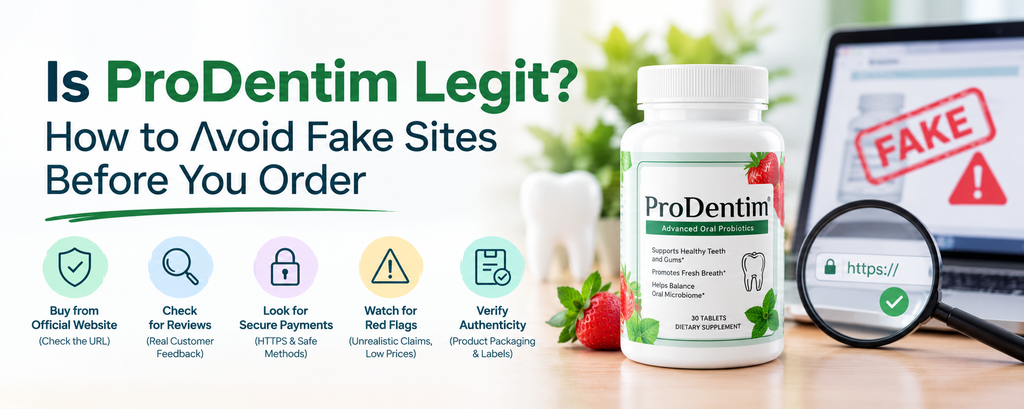
Is ProDentim Legit? How to Avoid Fake Sites Before You Order

Search for ProDentim and you land in a maze: glowing reviews, scam warnings, “official” sites with slightly different spellings, and news-style pages that read like journalism but are really ads. So is ProDentim legit, and how do you make sure you’re buying the real thing? Here is a straight answer, including the complaints many affiliate sites skip. For product details, see our ProDentim review. Quick answer: ProDentim has been sold online for several years as a dietary supplement and has a stated refund policy, so it isn’t a vanishing-website scam. But “legit” doesn’t mean “proven.” Customer feedback is mixed, with recurring complaints about refunds, results and aggressive advertising. The safest approach is to buy only from the verified official page, pay by a method with dispute rights, document everything and use the guarantee window actively. What “legit” does and doesn’t mean The most common complaints, and what to do about each 1. Slow or difficult refunds. Several reviewers describe delays, unanswered emails or disputes over refund eligibility. Protect yourself by requesting refunds in writing, early, with documentation. Our guide to the 60-day guarantee has a step-by-step process. 2. “It didn’t work.” Oral probiotic studies are small and short, and effects are modest and sometimes short-lived. Set measurable goals before you start rather than hoping for dramatic change. 3. Misleading ads. Some reviewers say they were drawn in by news-style pages and “discovery” stories. A page that mimics a news site, features a dramatic personal story, a countdown timer or unverifiable doctor claims is advertising, not independent journalism. 4. Unauthorized sellers. Review sites warn about listings on resale marketplaces. Treat these as unverified, and assume the guarantee may not apply. [CONFIRM official stance on Amazon, eBay and other resellers.] 5. Unexpected charges. Some reviewers report double charges or extra items. Check your cart, confirm there is no recurring billing and read your confirmation email. [CONFIRM whether any subscription or auto-ship option exists.] How to avoid fake ProDentim sites: a 10-point checklist If you already ordered from a suspicious site Contact your card issuer or bank to dispute the charge, watch your statements, change any passwords you entered, and ignore anyone who asks for an extra “restocking fee.” You can also report it to the FTC at ReportFraud.ftc.gov. Who should skip ProDentim FAQ: is ProDentim legit? Is ProDentim a scam? It appears to be a real product with a stated refund policy, but experiences are mixed, and marketing often exceeds the evidence. Treat it as a supplement to evaluate carefully, not a proven treatment. Is ProDentim FDA-approved? No supplement is FDA-approved for effectiveness before sale, and ProDentim is not intended to diagnose, treat, cure or prevent disease. Is ProDentim sold on Amazon or in stores? [CONFIRM.] Reviews suggest it is sold through its official website only, so be cautious with any other seller. Why are there so many ProDentim websites? Affiliate marketing (including ours) plus copycat sites. That is why we link only to the official page from our ProDentim review. Can I trust online reviews? Use them as one signal. Unhappy customers are more likely to post, and some positive reviews are paid. Look for patterns across several independent sources. ProDentim is a real but unproven product with mixed customer feedback. If you decide to try it, verify the official page, document your purchase and use the guarantee proactively. Start with our complete ProDentim review, then read how the 60-day guarantee works. Sources: Trustpilot: prodentim.com · ICANN lookup · FTC ReportFraud These statements have not been evaluated by the FDA. ProDentim is a dietary supplement and is not intended to diagnose, treat, cure or prevent any disease. Educational only, not medical advice.

Blog

ProDentim vs Regular Probiotic Capsules: Is There Really a Difference?

If you already take a probiotic capsule, or you can buy one for a fraction of the price, it’s fair to ask what a product like ProDentim does differently. The short version: the differences are real, but “different” doesn’t automatically mean “better.” Here is how oral-focused chewables and standard capsules compare, and how to choose. For the full product breakdown, see our ProDentim review. Quick answer: ProDentim is a chewable aimed at the mouth, while most capsules are designed to survive stomach acid and work in the gut. Benefits are strain-specific, so a gut-focused capsule isn’t proven to help gums or breath, and an oral product isn’t proven to help digestion. Neither type is better at the other’s job. Side by side Delivery. ProDentim is a chewable tablet meant to dissolve or be chewed in the mouth, which gives bacteria time in contact with teeth and gums. Capsules pass through the mouth quickly and are often built to release in the intestine. [CONFIRM the official directions for taking ProDentim.] Target. Oral products aim at the mouth microbiome. Standard capsules target the gut. Strains. Some species appear in both categories, including L. reuteri, L. paracasei and B. lactis. But a Frontiers in Microbiology review points out that many probiotic products contain strains with no documented health benefit in the mouth. Same species name does not mean the same effect. Dose. ProDentim is described as 3.5 billion CFU combined across its strains. Capsules often list 10 to 50 billion or more. More CFU is not automatically better, since benefit depends on the strain and the dose tested in studies. Extras. ProDentim adds inulin (a prebiotic), malic acid, tricalcium phosphate and peppermint. Most capsules are just the bacteria plus fillers. See our breakdown of the ProDentim ingredients. Price. Reviews have reported roughly $49 to $69 per 30-day bottle of ProDentim depending on the bundle [CONFIRM current pricing]. Many standard probiotic capsules cost less per month. Evidence. Gut probiotics have a larger evidence base for digestive conditions. Oral probiotics have a smaller base, and a 2023 systematic review in Pharmaceuticals concluded that dental benefits are not yet solidly backed by evidence. Where to buy. ProDentim is reported to be sold through its official site only [CONFIRM], so you can’t compare store prices or return it to a shop. Capsules are sold almost everywhere. Can a regular probiotic help your mouth? Possibly in indirect ways, since oral and gut microbes overlap and some species show up in both. But I found no good evidence that swallowing a standard capsule improves gum health or breath. Opening or chewing capsules that are designed for delayed release is not a validated method and may reduce how many bacteria survive, so don’t improvise. Which should you choose? Pros and cons: ProDentim vs capsules ProDentim pros: designed for mouth contact; includes a species with oral research; adds a prebiotic; guarantee [CONFIRM]. ProDentim cons: higher cost; limited disclosure of per-strain doses; no published trials of the finished product found; sold through one channel. Capsule pros: widely available; often cheaper; larger evidence base for gut outcomes; easy store returns. Capsule cons: not designed for mouth contact; oral benefit unproven; strain quality varies by brand. FAQ: ProDentim vs capsules Is ProDentim better than a regular probiotic? It depends on your goal. For mouth-focused use it is designed more appropriately, but proof that it works better is limited. For gut health, a standard probiotic has more supporting evidence. Can I take ProDentim with a gut probiotic? Healthy adults commonly combine products, but check with your doctor, particularly if you have a medical condition or a weakened immune system. Do oral probiotics replace brushing and flossing? No. At best they are an add-on. Do I need to chew or dissolve ProDentim? Follow the official directions on the label. [CONFIRM.] The bottom line Oral and gut probiotics solve different problems, and strain-level evidence matters more than CFU counts or marketing. If you want to try an oral option, compare it using our checklist, weigh the cost and read the complete ProDentim review before ordering. Sources: Frontiers in Microbiology, 2024 · Pharmaceuticals, 2023 These statements have not been evaluated by the FDA. ProDentim is a dietary supplement and is not intended to diagnose, treat, cure or prevent any disease. Educational only, not medical advice. Talk to your doctor or dentist before changing your health routine.
Blog

ProDentim Ingredients Explained: What’s Inside and What the Research Says

ProDentim is marketed as an oral probiotic: a chewable tablet taken daily for gum, breath and mouth health. Before you spend money on any supplement, it pays to know exactly what’s in it. This guide goes through each ingredient, what research exists on it, what isn’t clearly disclosed, and who should be cautious. For price, pros and cons, see our full ProDentim review. Quick answer: Descriptions of the current formula list three probiotic strains (Lactobacillus reuteri, Lactobacillus paracasei and Bifidobacterium lactis BL-04) with a combined 3.5 billion CFU, plus inulin, malic acid, tricalcium phosphate and peppermint. Research on some of these strains is encouraging for breath and gum outcomes, but I found no published trials of the finished product, and amounts per strain aren’t clearly disclosed. [CONFIRM against the live label.] Check the label first Descriptions of ProDentim have varied. Current official-style descriptions list three strains, while older marketing and some third-party sites mention Streptococcus salivarius strains such as K12 and M18, or spearmint. Always read the Supplement Facts panel on the bottle you’re buying. You can also look up supplement labels in the NIH’s Dietary Supplement Label Database. [CONFIRM: paste the exact current Supplement Facts panel here.] The probiotic strains With probiotics, the strain matters more than the genus or species. A Frontiers in Microbiology review of oral-care probiotics stresses strain-level evidence and warns that many products contain strains with no documented oral benefit. Lactobacillus reuteri This is among the most studied oral probiotic species, with trials looking at gum inflammation and plaque. A pooled analysis of randomized trials in the BMJ Open, summarized by HealthDay, found that probiotics (including L. reuteri) may ease bad breath in the short term. The catch: results are strain-specific, and the descriptions I found identify only BL-04 down to the strain code. [CONFIRM whether strain codes are published.] Lactobacillus paracasei This species has been studied in dental research, for example for effects on cavity-related bacteria, but oral research is smaller and more varied than for L. reuteri. Marketing claims about gums and sinuses go further than I could verify. Bifidobacterium lactis BL-04 BL-04 is a well-known commercial strain. Most published work on it focuses on gut and immune outcomes rather than the mouth, so its place in an oral formula has a plausible but less direct rationale. What about “3.5 billion CFU”? CFU means colony-forming units, a count of live organisms. It is not a quality score. Doses used in studies vary widely by strain, and 3.5 billion is a combined figure, so you can’t tell how much of each strain you get or compare it with trial doses. Look for CFU “through expiration,” not just at manufacture. The supporting ingredients What the research does and doesn’t show for the finished product Strains studied is not the same as product tested. In my research I found no published randomized trials of ProDentim itself. If the official page cites a study, check four things: who ran and funded it, how many people and for how long, what was measured (breath scores, gum bleeding, plaque), and whether the formula tested matches today’s formula. For context, reviews of oral probiotics overall conclude the field is promising but not proven. Our pillar guide on oral probiotics explains what the research does and doesn’t show. Safety and who should be cautious Probiotics are generally well tolerated by healthy adults, with mild digestive upset such as gas the most common complaint. Talk to a doctor first if you have a weakened immune system or serious illness, take immunosuppressants, are pregnant or breastfeeding, or are allergic to chicory or ragweed-family plants (relevant to inulin). Don’t give an adult supplement to a child without pediatric advice. And no supplement replaces brushing, flossing or dental checkups. Pros and cons at a glance Pros Cons FAQ: ProDentim ingredients What are the ingredients in ProDentim? Current descriptions list L. reuteri, L. paracasei, B. lactis BL-04, inulin, malic acid, tricalcium phosphate and peppermint. Always verify against the label. Does ProDentim contain Streptococcus salivarius K12 or M18? Older marketing and some third-party sites say yes. Current official-style descriptions list three strains. Check your bottle. Is ProDentim safe? It is generally considered low risk for healthy adults, but people with weakened immunity or serious illness should ask a doctor first. Does ProDentim have side effects? Mild digestive effects such as gas are possible, particularly from inulin. Is ProDentim clinically proven? Some of its strains have been studied. I found no published trials of the finished product, so “clinically proven” would overstate the evidence. The formula is simple and includes at least one species with real oral research, but key details (per-strain doses, strain codes) aren’t transparent, and the finished product hasn’t, as far as I can find, been tested in published trials. If it still interests you, read our complete ProDentim review and check the guarantee details before you order. Sources: Frontiers in Microbiology, 2024 · HealthDay on the BMJ Open analysis · NIH Dietary Supplement Label Database These statements have not been evaluated by the FDA. ProDentim is a dietary supplement and is not intended to diagnose, treat, cure or prevent any disease. Educational only, not medical advice. Talk to your doctor or dentist before changing your health routine.
Blog

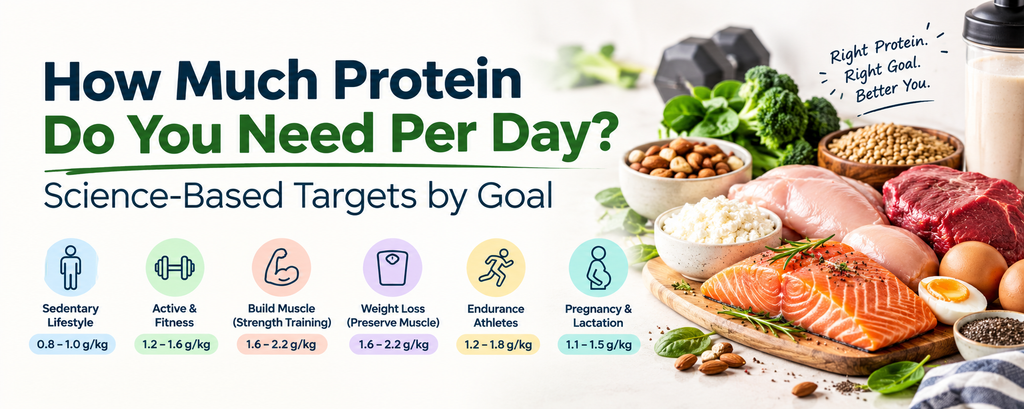
How Much Protein Per Day? Science-Based Targets by Goal

Protein is everywhere right now: bars, shakes, “high-protein” everything. Interest is climbing alongside the boom in longevity and strength training. But with claims ranging from “just eat normally” to “a gram per pound,” how much protein do you actually need? This guide breaks down what the research supports for general health, muscle building, weight loss and healthy aging, with a simple way to calculate your own number. Quick answer: The Recommended Dietary Allowance (RDA) is 0.8 grams of protein per kilogram of body weight per day (about 0.36 g per pound), a minimum to prevent deficiency in most healthy adults. Many experts suggest roughly 1.0 to 1.2 g/kg for healthy older adults and about 1.2 to 1.6 g/kg for people who lift weights or are losing weight. If you have kidney disease, ask your doctor first. Why the RDA is a floor, not a goal The RDA of 0.8 g/kg was designed to prevent deficiency in most healthy adults, not as a proven target for muscle, performance or longevity. A narrative review by Wayne Campbell found that older adults who consume less than the RDA tend to lose muscle size, quality and function faster. It also found that, in controlled feeding trials, intakes above the RDA did not change lean mass under non-stressed conditions but did help during two “stressors”: energy restriction (dieting) and resistance training. The takeaway: more protein isn’t automatically better, but it becomes more useful when you’re dieting, training or getting older. How to calculate your protein target Example for a 70 kg (154 lb) person: Protein targets by goal Protein, muscle and healthy aging Harvard Health reports that men begin losing as much as 3% to 5% of their muscle mass per decade after age 30. That matters because muscle supports strength, balance, metabolism and independence as we age. Older adults can also have “anabolic resistance,” meaning they need more protein to trigger the same muscle-building response, as discussed in the Campbell review. Observational data are encouraging too. UTMB Health notes that older adults eating about 1.0 to 1.2 g/kg were less likely to become frail than those eating under 0.8 g/kg. Harvard Health also points to a 2023 review in the Journals of Gerontology suggesting 1 to 1.6 g/kg may help older adults increase muscle strength. One honest caveat: protein is not a proven longevity hack on its own. Strength training is the strongest stimulus for building muscle, so pair protein with resistance exercise, good sleep and overall healthy eating. Explore more in our longevity topic and nutrition hub. How much protein per meal? Spreading protein through the day appears to work better than eating most of it at dinner. UTMB Health suggests aiming for about 25 to 30 g per meal to support muscle building, particularly in older adults. Total daily intake matters most, so don’t stress over exact timing, though including protein within a couple of hours after training is a sensible habit. Protein-rich foods (approximate values) Amounts vary by brand and preparation, so check labels. A sample day (about 100 to 110 g): Looking after digestion too? High-protein eating works best with enough fiber, so see our guide to improving gut health. Is too much protein harmful? Healthy adults with normal kidney function generally tolerate higher intakes, but very high protein over long periods isn’t proven to be better and may not suit everyone. Anyone with chronic kidney disease should get individual advice from their doctor or a dietitian. Food should come first; if you use protein powder, choose products with third-party testing and watch for added sugar. Recovery also depends on rest, and muscle repair happens largely while you sleep. See how to sleep better naturally. FAQ: daily protein How much protein do I need to build muscle? Most research-backed advice falls around 1.2 to 1.6 g/kg per day alongside progressive resistance training. Training matters more than eating extra protein beyond that. Can I eat all my protein at dinner? You can meet your total, but spreading it across meals is more effective for muscle, especially as you age. Is plant protein as good as animal protein? Plant proteins can meet your needs when you eat a variety, such as legumes, soy, whole grains, nuts and seeds, and sometimes a little more in total. Does protein help with weight loss? Higher protein can help preserve lean mass during weight loss and keep you feeling full, but total calories and overall diet quality still drive results. Do I need protein powder? No. It is a convenience, not a necessity. Many people can reach their target with ordinary foods. The bottom line Start with the RDA as your floor, then nudge your target up if you’re older, lifting weights or dieting. Aim for a steady 25 to 30 g at each meal, favor whole foods and lift something heavy a couple of times a week. If you have kidney disease or other health conditions, talk to your doctor before raising your intake. Sources: Harvard Health: Are you eating enough protein? · UTMB Health: How much protein do you really need each day? · Campbell: dietary protein needs of older adults · The link between dietary protein intake, skeletal muscle function and health in older adults Educational only, not medical advice. Talk to your doctor or a registered dietitian before changing your diet.

Blog

How to Sleep Better Naturally: 7-Step Evening Routine

Roughly one in three adults isn’t getting enough sleep, according to CDC figures summarized by Harvard Health. Meanwhile, sleep has become a wellness obsession, with rings, mattresses and supplements all promising a fix. The truth is less glamorous: the biggest gains usually come from a handful of consistent habits. This guide walks you through a seven-step evening routine, plus an honest look at magnesium and sleep trackers. Quick answer: To sleep better naturally, keep a consistent wake time, get daylight early, set a caffeine cutoff, limit alcohol, wind down for 30 to 60 minutes in dim light, keep your bedroom cool, dark and quiet, and exercise earlier in the day. If poor sleep has lasted three months or more, ask a doctor about cognitive behavioral therapy for insomnia (CBT-I). How much sleep do you actually need? The American Academy of Sleep Medicine and Sleep Research Society recommend that adults get at least 7 hours a night, and most do best with 7 to 9. Teens generally need 8 to 10. Quality and regularity count too: sleeping at roughly the same times each day matters, not just the total. You can read more about the health effects of too little sleep in the NHLBI overview. The 7-step evening routine 1. Anchor your wake time, not your bedtime Pick a wake-up time you can keep every day, then let your bedtime follow. Consistency trains your body clock. Harvard Health notes that a 2023 National Sleep Foundation consensus statement suggests some catch-up sleep on the weekend may help after a week of short sleep, but a steady schedule is still healthier. 2. Get light early, dim light late Step outside for 10 to 30 minutes of daylight soon after waking. In the evening, lower the lights an hour before bed. Bright light late at night tells your brain it’s still daytime. 3. Set a caffeine curfew Caffeine lingers longer than most people expect. In a lab study often cited in the sleep literature, 400 mg of caffeine (about four cups of coffee) taken six hours before bedtime still reduced sleep. Start with a cutoff at least six hours before bed, and move it earlier if you’re sensitive. 4. Be strategic with alcohol and late meals Alcohol can make you drowsy but tends to fragment sleep, and Harvard Health notes it can worsen snoring and cut REM sleep. Finish heavy meals two to three hours before bed so digestion doesn’t compete with rest. 5. Build a 30 to 60 minute wind-down Choose calming, low-stimulation activities: a warm shower, light stretching, reading a paper book, slow breathing or writing tomorrow’s to-do list so your mind can let go. Evidence on blue light alone is mixed, so focus on the bigger culprit, stimulating content like work email and scrolling. Charge your phone across the room. 6. Make the bedroom cool, dark and quiet Most people sleep better in a slightly cool room; 60 to 67°F (about 16 to 19°C) is a common target. Use blackout curtains or an eye mask, and white noise if needed. Reserve the bed for sleep. If you’re still awake after about 20 minutes, get up, do something calm in dim light and return when sleepy. 7. Move earlier in the day Regular activity supports deeper sleep. Most people do well with exercise finished a few hours before bed, although some tolerate evening workouts fine. If you nap, keep it short and before mid-afternoon. For training ideas, see our fitness topic. What about magnesium for sleep? Magnesium is one of the most searched sleep supplements, but the evidence is modest. Small studies, some in older adults with insomnia, suggest possible benefits, and any effect is most plausible if your intake is low. It works best alongside good sleep habits, not instead of them. Food comes first: pumpkin seeds, almonds, spinach, beans and whole grains all provide magnesium. If you consider a supplement, the NIH Office of Dietary Supplements sets an upper limit of 350 mg a day for supplemental magnesium in adults, and too much can cause diarrhea, nausea and cramping. Check with a clinician first, especially if you have kidney problems or take medications such as certain antibiotics or diuretics. Do sleep trackers help? Wearables can reveal useful patterns, such as inconsistent bedtimes or late-night caffeine effects. But sleep-stage estimates are approximations, and fixating on a “perfect score” can backfire. Sleep researchers even have a name for it: orthosomnia, anxiety about tracker data that worsens sleep. Use the trend over weeks, not a single night, and put the device away if it stresses you out. When sleep tips aren’t enough Good sleep hygiene helps many people, but not everyone. If you struggle at least three nights a week for three months or more, ask about CBT-I, a structured program that the American College of Physicians recommends as the first-line treatment for chronic insomnia. Also see a doctor if you have loud snoring, gasping or choking at night, morning headaches or heavy daytime sleepiness, which can signal sleep apnea. Stress is a common driver of poor sleep. If racing thoughts keep you up, read how to lower cortisol naturally. Sleep and digestion are also linked, which we cover in our gut health guide. For more, browse our sleep hub. FAQ: better sleep How can I fall asleep faster? Keep a steady schedule, dim lights in the evening, cut caffeine early and use a wind-down routine. If you can’t sleep after about 20 minutes, get up and do something calm until you feel drowsy. Why do I wake up at 3 a.m.? Common triggers include stress, alcohol, noise or light, temperature, and sleep apnea. Avoid clock-watching, and talk to a doctor if it happens often. Is it okay to sleep in on weekends? A little extra sleep after a short week may help, but big swings in wake time can disrupt your body clock. Aim for no more than an hour or so of difference. Is 6 hours of sleep enough? Most […]

Blog

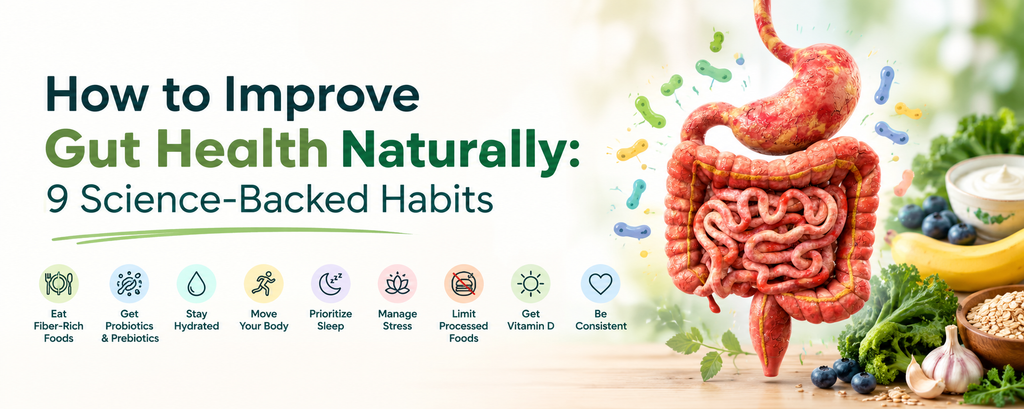
How to Improve Gut Health Naturally: 9 Science-Backed Habits

Scroll social media and gut health starts to look like a shopping list: powders, shots and week-long “resets.” The research behind it is genuinely exciting, but much of the loudest advice goes further than the evidence. The good news is that the best-supported ways to improve gut health are everyday habits you can start this week. Here are nine, with honest notes on how strong the evidence is. Quick answer: The strongest evidence points to eating a wide variety of plants, adding fermented foods regularly, limiting ultra-processed food and heavy alcohol, using antibiotics only when prescribed, and protecting your sleep, stress levels and activity. You don’t need a supplement to start. What does “gut health” actually mean? Doctors rarely use the phrase “gut health.” They talk about the gut microbiome, the community of trillions of bacteria, fungi and viruses living mostly in your large intestine, and about specific digestive conditions. Researchers often treat microbial diversity as a sign of a resilient microbiome, although there is no single “perfect” one. The study behind the hype: fermented foods vs. fiber In a randomized Stanford trial published in Cell, 36 healthy adults followed either a fermented-food diet or a high-fiber diet for 10 weeks. The fermented-food group, eating things like yogurt, kefir and kimchi, showed greater microbiome diversity and lower molecular signs of inflammation. The high-fiber group’s overall diversity didn’t rise during the study, but their microbes did shift toward breaking down more complex carbohydrates, and immune responses varied from person to person. Caveats: the trial was small, short and limited to healthy adults, and the researchers noted fiber’s effects may take longer to appear. The practical takeaway is to do both. 9 ways to improve gut health naturally 1. Eat a wider variety of plants Aim for variety, not just volume: legumes, whole grains, nuts, seeds, fruits, vegetables, herbs and spices. Observational data from the American Gut Project linked eating 30 or more different plant foods a week with a more diverse microbiome, though that kind of study shows association, not proof. 2. Add fermented foods (start small) Try yogurt or kefir with live cultures, kimchi, sauerkraut, miso, tempeh, or traditional options like curd and buttermilk. In the Stanford study, the fermented group increased to around six servings a day, which is more than most people need to start. One daily serving is a realistic first step. Check labels for “live and active cultures,” because pasteurized shelf-stable versions won’t deliver live microbes, and watch the salt in brined foods. 3. Build up fiber gradually Most adults fall short of the commonly cited 25 to 38 grams a day. Add fiber slowly and drink enough water to avoid gas and bloating. Prebiotic-rich foods such as garlic, onions, oats, legumes and slightly green bananas feed beneficial microbes. 4. Go easy on ultra-processed food and heavy alcohol Diets heavy in ultra-processed food tend to crowd out fiber and variety, and some additives are being studied for effects on gut microbes, although human evidence is still developing. Heavy drinking is also hard on the digestive tract. Our nutrition guides have practical swaps. 5. Use antibiotics wisely Antibiotics save lives and are sometimes essential, but they can reduce microbial diversity. Take them only when prescribed, finish the course your clinician recommends, and ask whether a probiotic makes sense for you, since evidence suggests some strains may lower the risk of antibiotic-associated diarrhea. 6. Protect your sleep Poor and irregular sleep is linked with changes in the microbiome and with digestive symptoms, though much of this research is early. A steady wake time and a calm evening routine help both. See our guide on how to sleep better naturally or Harvard Health’s sleep hygiene tips. 7. Manage stress Your gut and brain communicate constantly, and stress can change gut movement and worsen symptoms such as cramping or irregularity. Breathing practices, time outdoors and good sleep all help. Read more in how to lower cortisol naturally and browse our mind topic. 8. Move your body regularly Several studies link regular physical activity with a more diverse microbiome, and exercise helps digestion and mood independently. Walking daily and adding strength work is plenty. 9. Be selective with probiotic supplements Probiotic benefits are strain-specific, and most healthy people don’t need a supplement to start. If you do try one, apply the same checklist we use for mouth products in our guide to oral probiotics: named strains, human evidence and realistic claims. Probiotics, prebiotics and fermented foods: what’s the difference? Signs you should talk to a doctor Occasional gas or bloating is common. See a clinician promptly for blood in your stool or black, tarry stools, unexplained weight loss, diarrhea or constipation lasting more than a few weeks, severe or worsening abdominal pain, trouble swallowing, or symptoms that wake you at night. Don’t rely on at-home stool kits or diet changes to self-diagnose. FAQ: gut health How long does it take to improve gut health? Short-term diet changes can shift gut bacteria rapidly, but lasting benefits depend on keeping the habits up. Think in weeks to months, not days. What are the best foods for gut health? A mix works best: legumes, whole grains, vegetables, fruit, nuts and seeds for fiber, plus yogurt with live cultures, kefir, kimchi, sauerkraut or miso for fermented options. Do I need a probiotic supplement? Most healthy people can start with food. Specific strains may help specific conditions, so ask a clinician before spending money. Is there a quick gut reset? There is no good evidence that cleanses or detox teas improve gut health. Consistent daily habits do. Does gut health affect mood? Research on the gut-brain connection is active and suggests links, but it’s early. Diet is not a replacement for care if you’re struggling with anxiety or low mood. The bottom line Improving gut health is less about a perfect protocol and more about consistent basics: diverse plants, regular fermented foods, good sleep, stress management and movement. Pick two habits from this list and […]

Oral Probiotics
Blog

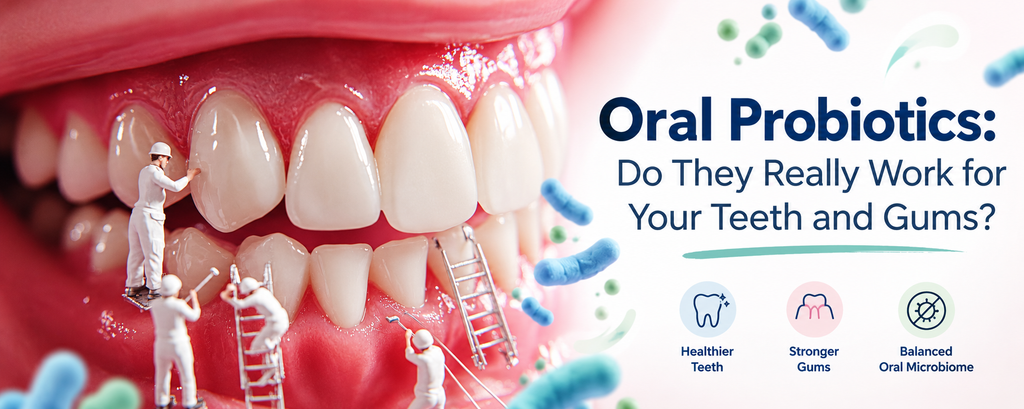
Oral Probiotics: Do They Really Work for Your Teeth and Gums?

Walk down any pharmacy aisle and you’ll find probiotics for your gut, your skin and now your mouth. Oral probiotics promise fresher breath, healthier gums and fewer cavities by “rebalancing” the bacteria between your teeth. It’s an appealing idea, because gum problems are common: a CDC national survey (NHANES 2009–2010) estimated that nearly half of US adults aged 30 and over had some form of periodontitis. You can explore the agency’s oral health resources for current guidance. So do these products work? In short, the science is promising but early, and results depend heavily on the specific bacterial strain. Here is what the research does and doesn’t show, and how to evaluate any product before you buy. Quick answer: Some probiotic strains have been shown to reduce harmful oral bacteria and the microbes behind bad breath, but evidence that oral probiotics prevent or treat gum disease and cavities is not yet solid. Treat them as an optional extra, never a replacement for brushing, flossing and dental care. What are oral probiotics? Oral probiotics are live beneficial bacteria, usually taken as lozenges or chewable tablets, designed to settle in the mouth and crowd out harmful microbes linked to bad breath, cavities and gum inflammation. Unlike gut probiotics, they need contact with teeth and gums, so they are typically dissolved or chewed rather than swallowed whole. Your oral microbiome in 60 seconds Your mouth hosts hundreds of bacterial species. Most are harmless or helpful, and a balanced community helps protect against infection. When that balance tips, a state called dysbiosis, it has been associated with oral and whole-body conditions, including periodontal disease (Periodontology 2000 review). The theory behind oral probiotics is “replacement therapy”: introduce beneficial strains that compete with disease-causing bacteria for space and nutrients, a process known as competitive exclusion (Frontiers in Microbiology review). What does the research actually show? The encouraging part. A 2024 review in Frontiers in Microbiology, which looked at strains in oral-care probiotics sold in the US, notes that certain strains have been shown to lower levels of oral pathogens, inhibit cavity formation and reduce the bacteria that cause halitosis (bad breath). The cautious part. That same review warns that as the market grows, many products contain species and strains with no documented health benefit, which fuels consumer confusion. A 2023 systematic review in Pharmaceuticals searched PubMed, Scopus and Web of Science and concluded that using probiotics for dental health is not yet solidly backed by evidence. It called for more research on long-term effects, including whether the bacteria can colonize the mouth and form biofilms. The lab-to-clinic gap. A review of laboratory and animal studies found encouraging effects on gum-disease bacteria and inflammation, but cautioned that changing the oral biofilm could also disturb beneficial resident bacteria. Those findings justify more clinical trials, not big promises. What this means for you: The clearest signals involve changes in oral bacteria and breath-related microbes. Proof that a given product will improve long-term gum or tooth health is thinner. Which strains have been studied? Researchers have examined strains from four groups: Streptococcus, Lactobacillus, Bifidobacterium and Bacillus. Names that come up often in the oral probiotic literature include Streptococcus salivarius K12 and M18 and Lactobacillus reuteri. The key point is that benefits are strain-specific. A label that says “probiotic blend” doesn’t tell you whether any of its microbes have actually been tested for oral outcomes. How to choose an oral probiotic: a 6-point checklist Where does ProDentim fit? If you’re weighing specific products, our in-depth ProDentim review covers the ingredients, price, how to use it, the pros and cons, and the 60-day guarantee. Run it through the checklist above like any other product: Are the strains named? Is there evidence for those strains? Do the claims match the research? Habits that matter more than any probiotic Browse more articles in our oral health hub. When to see a dentist Book an appointment if you notice persistent bad breath that’s hard to shake, red or bleeding gums, painful chewing, loose or sensitive teeth, or receding gums. These are the warning signs of gum disease listed by the CDC, and a probiotic is not the right first step. If you have a serious medical condition or a weakened immune system, ask your doctor before taking any probiotic. FAQ: oral probiotics Do oral probiotics really work? Some strains show benefits for oral bacteria and breath in studies, but evidence for preventing or treating gum disease and cavities is still limited. Results vary by strain and product. Can oral probiotics replace brushing and flossing? No. At best they are an add-on. Removing plaque mechanically and getting regular dental checkups remain the foundation. Are oral probiotics different from gut probiotics? Yes. Oral products use strains chosen to act in the mouth, while the Frontiers review notes that many probiotic products contain strains with no documented oral benefit. How long do they take to work? Study lengths vary, so there’s no universal timeline. Give a product a fair trial, but don’t expect overnight change, and see a dentist if symptoms persist. Are oral probiotics safe? They are generally well tolerated by healthy people, with mild digestive upset the most common complaint. Anyone with a weakened immune system or serious illness should check with a doctor first. The bottom line Oral probiotics are an interesting, fast-moving area, but they remain a supplement to solid oral hygiene, not a substitute. If you try one, choose named strains with human evidence, keep your expectations realistic and keep seeing your dentist. Ready to compare a specific product? Start with our ProDentim review. Sources: Frontiers in Microbiology, 2024 · Pharmaceuticals, 2023 · Periodontology 2000, 2021 · CDC oral health Educational only, not medical advice. Talk to your doctor or dentist before changing your health routine. Disclosure: Some links on ProWellCure may be affiliate links. We may earn a commission at no extra cost to you, and it never changes our assessments.