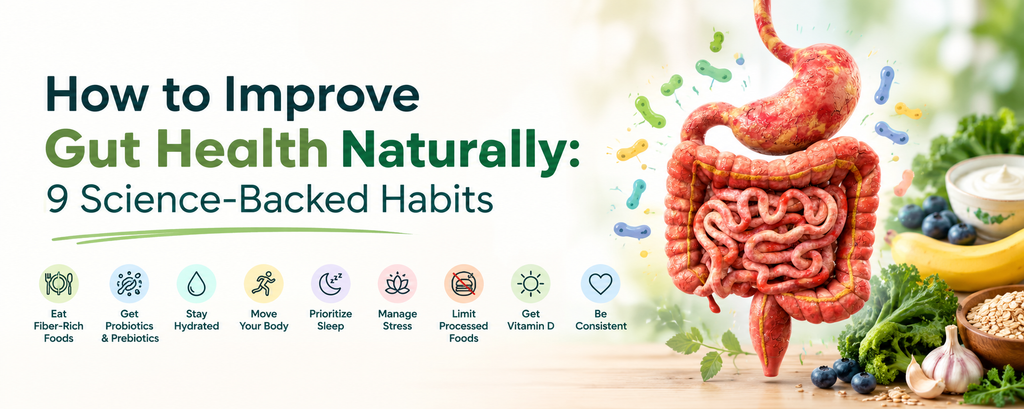
Scroll social media and gut health starts to look like a shopping list: powders, shots and week-long “resets.” The research behind it is genuinely exciting, but much of the loudest advice goes further than the evidence. The good news is that the best-supported ways to improve gut health are everyday habits you can start this week. Here are nine, with honest notes on how strong the evidence is.
Quick answer: The strongest evidence points to eating a wide variety of plants, adding fermented foods regularly, limiting ultra-processed food and heavy alcohol, using antibiotics only when prescribed, and protecting your sleep, stress levels and activity. You don’t need a supplement to start.
What does “gut health” actually mean?
Doctors rarely use the phrase “gut health.” They talk about the gut microbiome, the community of trillions of bacteria, fungi and viruses living mostly in your large intestine, and about specific digestive conditions. Researchers often treat microbial diversity as a sign of a resilient microbiome, although there is no single “perfect” one.
The study behind the hype: fermented foods vs. fiber
In a randomized Stanford trial published in Cell, 36 healthy adults followed either a fermented-food diet or a high-fiber diet for 10 weeks. The fermented-food group, eating things like yogurt, kefir and kimchi, showed greater microbiome diversity and lower molecular signs of inflammation.
The high-fiber group’s overall diversity didn’t rise during the study, but their microbes did shift toward breaking down more complex carbohydrates, and immune responses varied from person to person. Caveats: the trial was small, short and limited to healthy adults, and the researchers noted fiber’s effects may take longer to appear. The practical takeaway is to do both.
9 ways to improve gut health naturally
1. Eat a wider variety of plants
Aim for variety, not just volume: legumes, whole grains, nuts, seeds, fruits, vegetables, herbs and spices. Observational data from the American Gut Project linked eating 30 or more different plant foods a week with a more diverse microbiome, though that kind of study shows association, not proof.
2. Add fermented foods (start small)
Try yogurt or kefir with live cultures, kimchi, sauerkraut, miso, tempeh, or traditional options like curd and buttermilk. In the Stanford study, the fermented group increased to around six servings a day, which is more than most people need to start. One daily serving is a realistic first step. Check labels for “live and active cultures,” because pasteurized shelf-stable versions won’t deliver live microbes, and watch the salt in brined foods.
3. Build up fiber gradually
Most adults fall short of the commonly cited 25 to 38 grams a day. Add fiber slowly and drink enough water to avoid gas and bloating. Prebiotic-rich foods such as garlic, onions, oats, legumes and slightly green bananas feed beneficial microbes.
4. Go easy on ultra-processed food and heavy alcohol
Diets heavy in ultra-processed food tend to crowd out fiber and variety, and some additives are being studied for effects on gut microbes, although human evidence is still developing. Heavy drinking is also hard on the digestive tract. Our nutrition guides have practical swaps.
5. Use antibiotics wisely
Antibiotics save lives and are sometimes essential, but they can reduce microbial diversity. Take them only when prescribed, finish the course your clinician recommends, and ask whether a probiotic makes sense for you, since evidence suggests some strains may lower the risk of antibiotic-associated diarrhea.
6. Protect your sleep
Poor and irregular sleep is linked with changes in the microbiome and with digestive symptoms, though much of this research is early. A steady wake time and a calm evening routine help both. See our guide on how to sleep better naturally or Harvard Health’s sleep hygiene tips.
7. Manage stress
Your gut and brain communicate constantly, and stress can change gut movement and worsen symptoms such as cramping or irregularity. Breathing practices, time outdoors and good sleep all help. Read more in how to lower cortisol naturally and browse our mind topic.
8. Move your body regularly
Several studies link regular physical activity with a more diverse microbiome, and exercise helps digestion and mood independently. Walking daily and adding strength work is plenty.
9. Be selective with probiotic supplements
Probiotic benefits are strain-specific, and most healthy people don’t need a supplement to start. If you do try one, apply the same checklist we use for mouth products in our guide to oral probiotics: named strains, human evidence and realistic claims.
Probiotics, prebiotics and fermented foods: what’s the difference?
- Probiotics are live microorganisms taken in amounts meant to benefit health.
- Prebiotics are fibers and compounds that feed beneficial microbes.
- Fermented foods may contain live cultures, but not every fermented food counts as a probiotic, since some are heated or filtered after fermentation.
Signs you should talk to a doctor
Occasional gas or bloating is common. See a clinician promptly for blood in your stool or black, tarry stools, unexplained weight loss, diarrhea or constipation lasting more than a few weeks, severe or worsening abdominal pain, trouble swallowing, or symptoms that wake you at night. Don’t rely on at-home stool kits or diet changes to self-diagnose.
FAQ: gut health
How long does it take to improve gut health? Short-term diet changes can shift gut bacteria rapidly, but lasting benefits depend on keeping the habits up. Think in weeks to months, not days.
What are the best foods for gut health? A mix works best: legumes, whole grains, vegetables, fruit, nuts and seeds for fiber, plus yogurt with live cultures, kefir, kimchi, sauerkraut or miso for fermented options.
Do I need a probiotic supplement? Most healthy people can start with food. Specific strains may help specific conditions, so ask a clinician before spending money.
Is there a quick gut reset? There is no good evidence that cleanses or detox teas improve gut health. Consistent daily habits do.
Does gut health affect mood? Research on the gut-brain connection is active and suggests links, but it’s early. Diet is not a replacement for care if you’re struggling with anxiety or low mood.
The bottom line
Improving gut health is less about a perfect protocol and more about consistent basics: diverse plants, regular fermented foods, good sleep, stress management and movement. Pick two habits from this list and start this week. For more, explore our nutrition hub.
Sources: Neuroscience News on the Stanford trial · GEN on the multiomics analysis · Harvard Health on sleep hygiene
Educational only, not medical advice. Talk to your doctor before changing your health routine.