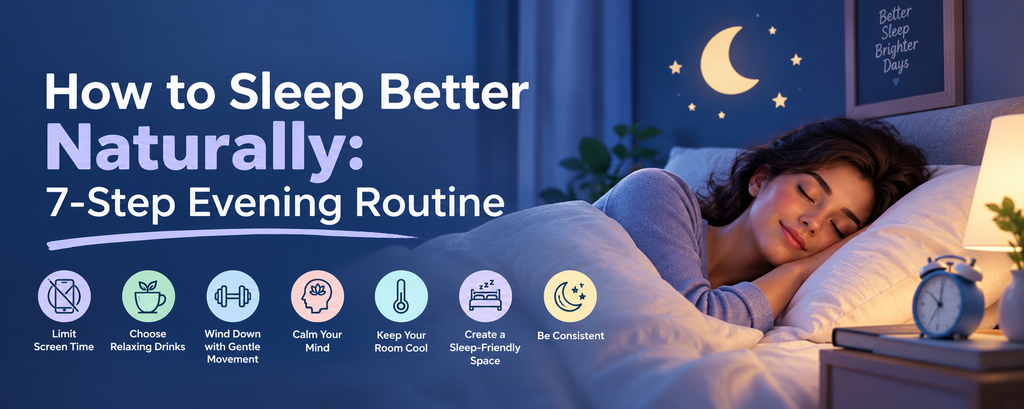
Roughly one in three adults isn’t getting enough sleep, according to CDC figures summarized by Harvard Health. Meanwhile, sleep has become a wellness obsession, with rings, mattresses and supplements all promising a fix. The truth is less glamorous: the biggest gains usually come from a handful of consistent habits. This guide walks you through a seven-step evening routine, plus an honest look at magnesium and sleep trackers.
Quick answer: To sleep better naturally, keep a consistent wake time, get daylight early, set a caffeine cutoff, limit alcohol, wind down for 30 to 60 minutes in dim light, keep your bedroom cool, dark and quiet, and exercise earlier in the day. If poor sleep has lasted three months or more, ask a doctor about cognitive behavioral therapy for insomnia (CBT-I).
How much sleep do you actually need?
The American Academy of Sleep Medicine and Sleep Research Society recommend that adults get at least 7 hours a night, and most do best with 7 to 9. Teens generally need 8 to 10. Quality and regularity count too: sleeping at roughly the same times each day matters, not just the total. You can read more about the health effects of too little sleep in the NHLBI overview.
The 7-step evening routine
1. Anchor your wake time, not your bedtime
Pick a wake-up time you can keep every day, then let your bedtime follow. Consistency trains your body clock. Harvard Health notes that a 2023 National Sleep Foundation consensus statement suggests some catch-up sleep on the weekend may help after a week of short sleep, but a steady schedule is still healthier.
2. Get light early, dim light late
Step outside for 10 to 30 minutes of daylight soon after waking. In the evening, lower the lights an hour before bed. Bright light late at night tells your brain it’s still daytime.
3. Set a caffeine curfew
Caffeine lingers longer than most people expect. In a lab study often cited in the sleep literature, 400 mg of caffeine (about four cups of coffee) taken six hours before bedtime still reduced sleep. Start with a cutoff at least six hours before bed, and move it earlier if you’re sensitive.
4. Be strategic with alcohol and late meals
Alcohol can make you drowsy but tends to fragment sleep, and Harvard Health notes it can worsen snoring and cut REM sleep. Finish heavy meals two to three hours before bed so digestion doesn’t compete with rest.
5. Build a 30 to 60 minute wind-down
Choose calming, low-stimulation activities: a warm shower, light stretching, reading a paper book, slow breathing or writing tomorrow’s to-do list so your mind can let go. Evidence on blue light alone is mixed, so focus on the bigger culprit, stimulating content like work email and scrolling. Charge your phone across the room.
6. Make the bedroom cool, dark and quiet
Most people sleep better in a slightly cool room; 60 to 67°F (about 16 to 19°C) is a common target. Use blackout curtains or an eye mask, and white noise if needed. Reserve the bed for sleep. If you’re still awake after about 20 minutes, get up, do something calm in dim light and return when sleepy.
7. Move earlier in the day
Regular activity supports deeper sleep. Most people do well with exercise finished a few hours before bed, although some tolerate evening workouts fine. If you nap, keep it short and before mid-afternoon. For training ideas, see our fitness topic.
What about magnesium for sleep?
Magnesium is one of the most searched sleep supplements, but the evidence is modest. Small studies, some in older adults with insomnia, suggest possible benefits, and any effect is most plausible if your intake is low. It works best alongside good sleep habits, not instead of them.
Food comes first: pumpkin seeds, almonds, spinach, beans and whole grains all provide magnesium. If you consider a supplement, the NIH Office of Dietary Supplements sets an upper limit of 350 mg a day for supplemental magnesium in adults, and too much can cause diarrhea, nausea and cramping. Check with a clinician first, especially if you have kidney problems or take medications such as certain antibiotics or diuretics.
Do sleep trackers help?
Wearables can reveal useful patterns, such as inconsistent bedtimes or late-night caffeine effects. But sleep-stage estimates are approximations, and fixating on a “perfect score” can backfire. Sleep researchers even have a name for it: orthosomnia, anxiety about tracker data that worsens sleep. Use the trend over weeks, not a single night, and put the device away if it stresses you out.
When sleep tips aren’t enough
Good sleep hygiene helps many people, but not everyone. If you struggle at least three nights a week for three months or more, ask about CBT-I, a structured program that the American College of Physicians recommends as the first-line treatment for chronic insomnia. Also see a doctor if you have loud snoring, gasping or choking at night, morning headaches or heavy daytime sleepiness, which can signal sleep apnea.
Stress is a common driver of poor sleep. If racing thoughts keep you up, read how to lower cortisol naturally. Sleep and digestion are also linked, which we cover in our gut health guide. For more, browse our sleep hub.
FAQ: better sleep
How can I fall asleep faster? Keep a steady schedule, dim lights in the evening, cut caffeine early and use a wind-down routine. If you can’t sleep after about 20 minutes, get up and do something calm until you feel drowsy.
Why do I wake up at 3 a.m.? Common triggers include stress, alcohol, noise or light, temperature, and sleep apnea. Avoid clock-watching, and talk to a doctor if it happens often.
Is it okay to sleep in on weekends? A little extra sleep after a short week may help, but big swings in wake time can disrupt your body clock. Aim for no more than an hour or so of difference.
Is 6 hours of sleep enough? Most adults need at least 7. Chronic short sleep can impair focus and health even when you feel used to it.
How long does it take to fix a sleep schedule? Many people notice improvement within one to two weeks of consistent habits, though chronic insomnia can take longer and may need professional help.
The bottom line
Better sleep rarely comes from one trick. It comes from steady timing, smart light and caffeine habits and a calm, cool bedroom. Pick two or three steps tonight and give them two weeks before judging the results.
Sources: Harvard Health: sleep hygiene · NHLBI: sleep deprivation · NIH ODS: magnesium fact sheet
Educational only, not medical advice. Talk to your doctor before changing your health routine.