Protein is everywhere right now: bars, shakes, “high-protein” everything. Interest is climbing alongside the boom in longevity and strength training. But with claims ranging from “just eat normally” to “a gram per pound,” how much protein do you actually need? This guide breaks down what the research supports for general health, muscle building, weight loss and healthy aging, with a simple way to calculate your own number.
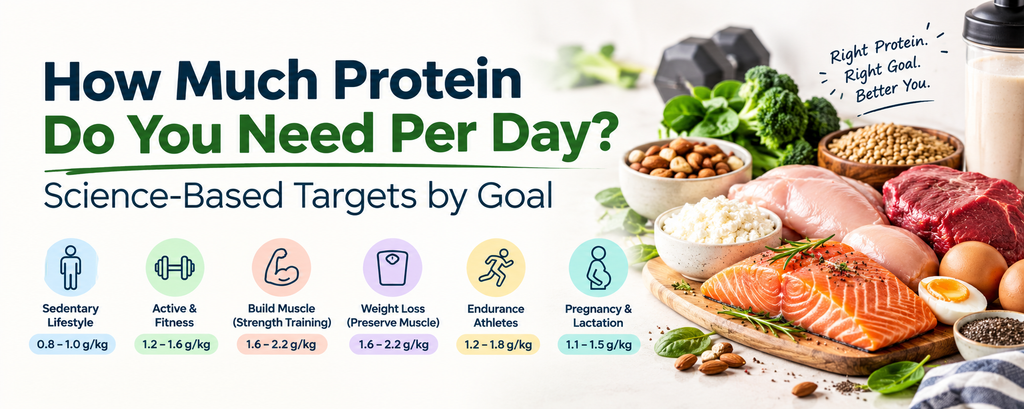
Quick answer: The Recommended Dietary Allowance (RDA) is 0.8 grams of protein per kilogram of body weight per day (about 0.36 g per pound), a minimum to prevent deficiency in most healthy adults. Many experts suggest roughly 1.0 to 1.2 g/kg for healthy older adults and about 1.2 to 1.6 g/kg for people who lift weights or are losing weight. If you have kidney disease, ask your doctor first.
Why the RDA is a floor, not a goal
The RDA of 0.8 g/kg was designed to prevent deficiency in most healthy adults, not as a proven target for muscle, performance or longevity. A narrative review by Wayne Campbell found that older adults who consume less than the RDA tend to lose muscle size, quality and function faster. It also found that, in controlled feeding trials, intakes above the RDA did not change lean mass under non-stressed conditions but did help during two “stressors”: energy restriction (dieting) and resistance training.
The takeaway: more protein isn’t automatically better, but it becomes more useful when you’re dieting, training or getting older.
How to calculate your protein target
- In kilograms: body weight (kg) × grams per kg
- In pounds: body weight (lb) × 0.36 for the RDA, or × 0.55 to 0.73 for the 1.2 to 1.6 g/kg range
Example for a 70 kg (154 lb) person:
- RDA minimum (0.8 g/kg): about 56 g a day
- Older adult or moderately active (1.2 g/kg): about 84 g a day
- Strength training or dieting (1.6 g/kg): about 112 g a day
Protein targets by goal
- General health, healthy adult: 0.8 g/kg (the minimum)
- Adults over 65: 1.0 to 1.2 g/kg, and 1.2 to 1.5 g/kg with illness, based on expert groups summarized by UTMB Health
- Building muscle with resistance training: roughly 1.2 to 1.6 g/kg
- Losing weight while keeping muscle: about 1.2 to 1.6 g/kg, according to UTMB Health
- Use caution above 2 g/kg: Harvard Health quotes nutrition researcher Frank Hu advising care with very high intakes of 2 g/kg or more
Protein, muscle and healthy aging
Harvard Health reports that men begin losing as much as 3% to 5% of their muscle mass per decade after age 30. That matters because muscle supports strength, balance, metabolism and independence as we age. Older adults can also have “anabolic resistance,” meaning they need more protein to trigger the same muscle-building response, as discussed in the Campbell review.
Observational data are encouraging too. UTMB Health notes that older adults eating about 1.0 to 1.2 g/kg were less likely to become frail than those eating under 0.8 g/kg. Harvard Health also points to a 2023 review in the Journals of Gerontology suggesting 1 to 1.6 g/kg may help older adults increase muscle strength.
One honest caveat: protein is not a proven longevity hack on its own. Strength training is the strongest stimulus for building muscle, so pair protein with resistance exercise, good sleep and overall healthy eating. Explore more in our longevity topic and nutrition hub.
How much protein per meal?
Spreading protein through the day appears to work better than eating most of it at dinner. UTMB Health suggests aiming for about 25 to 30 g per meal to support muscle building, particularly in older adults. Total daily intake matters most, so don’t stress over exact timing, though including protein within a couple of hours after training is a sensible habit.
Protein-rich foods (approximate values)
Amounts vary by brand and preparation, so check labels.
- Cooked chicken breast, 100 g: about 31 g
- Cooked salmon, 100 g: about 22 to 25 g
- Large egg: about 6 g
- Plain Greek yogurt, 170 g: about 15 to 17 g
- Cottage cheese, 1 cup: about 24 to 28 g
- Cooked lentils or dal, 1 cup: about 18 g
- Paneer, 100 g: about 18 g
- Firm tofu, 100 g: about 10 to 15 g
- Whey protein, 1 scoop: about 20 to 25 g
A sample day (about 100 to 110 g):
- Breakfast: 2 eggs and Greek yogurt with seeds, about 30 g
- Lunch: lentil bowl with 100 g tofu or paneer, about 30 to 36 g
- Snack: almonds and a glass of milk or curd, about 10 g
- Dinner: 100 to 120 g salmon or chicken with vegetables and whole grains, about 28 to 35 g
Looking after digestion too? High-protein eating works best with enough fiber, so see our guide to improving gut health.
Is too much protein harmful?
Healthy adults with normal kidney function generally tolerate higher intakes, but very high protein over long periods isn’t proven to be better and may not suit everyone. Anyone with chronic kidney disease should get individual advice from their doctor or a dietitian. Food should come first; if you use protein powder, choose products with third-party testing and watch for added sugar.
Recovery also depends on rest, and muscle repair happens largely while you sleep. See how to sleep better naturally.
FAQ: daily protein
How much protein do I need to build muscle? Most research-backed advice falls around 1.2 to 1.6 g/kg per day alongside progressive resistance training. Training matters more than eating extra protein beyond that.
Can I eat all my protein at dinner? You can meet your total, but spreading it across meals is more effective for muscle, especially as you age.
Is plant protein as good as animal protein? Plant proteins can meet your needs when you eat a variety, such as legumes, soy, whole grains, nuts and seeds, and sometimes a little more in total.
Does protein help with weight loss? Higher protein can help preserve lean mass during weight loss and keep you feeling full, but total calories and overall diet quality still drive results.
Do I need protein powder? No. It is a convenience, not a necessity. Many people can reach their target with ordinary foods.
The bottom line
Start with the RDA as your floor, then nudge your target up if you’re older, lifting weights or dieting. Aim for a steady 25 to 30 g at each meal, favor whole foods and lift something heavy a couple of times a week. If you have kidney disease or other health conditions, talk to your doctor before raising your intake.
Sources: Harvard Health: Are you eating enough protein? · UTMB Health: How much protein do you really need each day? · Campbell: dietary protein needs of older adults · The link between dietary protein intake, skeletal muscle function and health in older adults
Educational only, not medical advice. Talk to your doctor or a registered dietitian before changing your diet.